Photography Blog
Welcome to my Blog page.
Here you’ll find some examples of recent personal work, as well as articles on photography related topics. I also post the occasional tutorial videos with tips and tricks to help explain technical aspects of photography.
If you’re subscribed to my newsletter, you’ll receive much of what I post here as well as additional content.
Scroll through the clickable menu on the right hand side to find specific articles or posts.
Loading posts…
Stories
Everyone loves a good story.
Stories are at the heart of our social and cultural heritage. No matter where we’re from, we all grow up listening to stories and passing them on. They’re an intrinsic part of the social landscape; from religious beliefs and dogma to popular culture and art, stories are at the core of human communication. And when it comes to sharing important information, storytelling is one of the most useful and powerful tools we have.
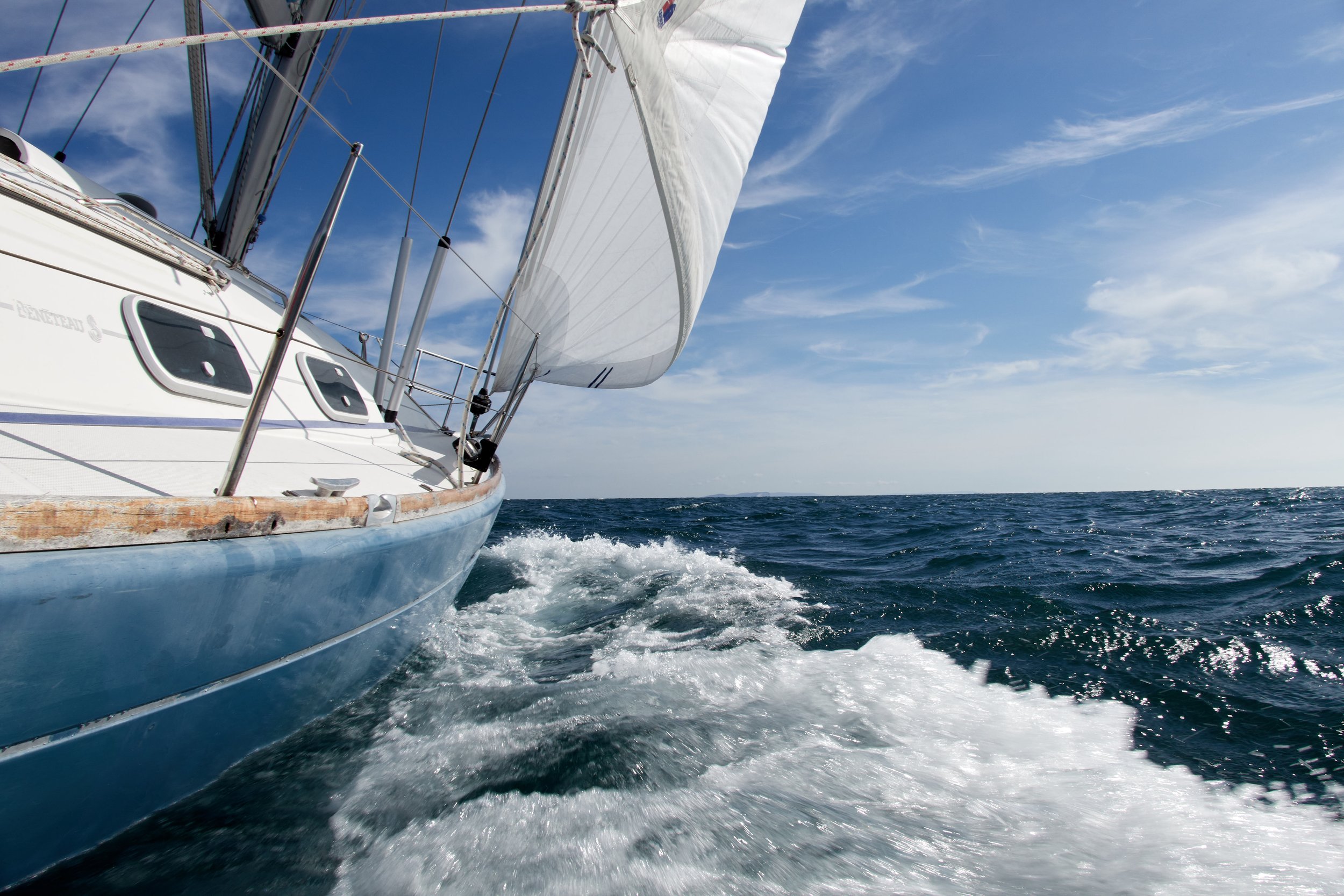
When we share images online we tell stories. We’re sharing our experiences with the world through a visual narrative. For example the images below from a weekend spent sailing with old friends earlier this year. The images combine to offer a short story that describes the experience.
Many stories follow a tried and tested formula and are intended to inform, educate, or entertain. They often depict journeys as metaphores for transformation or personal development. Not all stories are complete however, just as not all stories carry a responsibility to take a moral stance or make the world a better place. Some are simple tools that deliver a simple message, as in advertising or promotion, and it’s the means of that delivery - the story - that help the message succeed in finding its target. Of course the better the story, the more likely people are to remember it.
The most successful advertising campaigns often rely on comical or emotive narratives in order to engage their audience in this way. Similarly, company websites, marketing and promotional materials, even annual reports or promotional brochures all employ a visual narrative in order to get people’s attention and deliver their message.
Storytelling using stills images can take many forms: it can be a single, compelling image or a series of images taken over a period of time. A small collection of images can be used to showcase a process, a practice, or a product. No matter how simple or complex the narrative, photographic images provide an invaluable means of reaching your target audience.
Stories aren’t necessarily conclusive, they can be open-ended and form a small part of a wider, on-going narrative. For example the images below of skateboarders at the Undercroft at London’s Southbank Center don’t tell the complete story of urban skateboarding subculture; what they do is present a snapshot of that subculture, part of a much wider, on-going narrative.
Sometimes all it takes is a few images that represent an action or a process. I recently took an antique clock for repair and the small, atmospheric shop was so photogenic that I asked if I could take a few pictures when I came to collect it. The pictures tell a little story about the craftsman in his workshop. These pictures don’t offer a complete story, but there are details in them that provide clues which prompt us to develop our own interpretation.
Other stories of course carry a much greater responsibility. There is an established tradition of documentary photography which carries an implicit duty to represent its subject matter with honesty and integrity. The stories that I’ve tried to tell through my own work have been made as honestly as possible, with empathy and respect for my subjects.
There are instances where visual storytelling is by necessity more representative than actual documentary. For an awareness campaign highlighting real lived experiences of young people facing issues of homelessness the charity I was working with, CentrePoint hired young models to portray the true stories being depicted, in order to protect the privacy of the people behind them. While the resulting images could be interpreted as less than authentic, they nevertheless communicate a very real truth. Protecting people’s identities in this way shouldn’t detract from their stories.
As a photographer, my interest has always been in telling stories. Even when I’m taking corporate headshots, making environmental portraits or photographing food or product, I believe there is always an element of storytelling involved. It is, in my opinion, implicit in the very nature of photography.
If you want me to help tell your story, please get in touch.
Legacy - RIP John Downing OBE
When I meet a new group of people on one of my photo workshops, I sometimes start by asking if they have any favourite photographers. Depending on the nature of the workshop, people sometimes mention one or two names I’m familiar with, but often they come out with names I’ve never heard of, usually people they follow on Instagram who have a large social media following but aren’t necessarily what I would call ’Big Names’ in photography.
When I say ‘big names’, I’m thinking of those people who have been influential in the history of photography or have otherwise left a mark on our collective vision and understanding of the world through their work. Each photographic genre contains many such names and depending on your interest you may be more familiar with some than with others. I could reel off a long list of my own favourite photographers, across various genres whose work inspires me but it would probably be easier just to say ‘Magnum’ or ‘National Geographic’.
There are however those photographers whose names and work are largely unrecognised by anyone not closely involved in, or with an interest in photography. Photographers who in the course of their daily lives record the world and global events simply as part of their job, people who inform us about the wider world and show us things beyond the confines of our own experience. I’m referring of course to press photographers.
There are many hugely talented press photographers working around the world who produce stunning work on an almost daily basis, men and women who often put their own safety, even their own lives at risk, simply to report global events and in so doing shape our understanding of the world. I have no doubt that the world’s greatest press photographers belong to that group of men and women whose work has been influential in the history of photography.
It was one such photographer in particular to whom I owe my own passion for photography: John Downing, the former Chief Photographer of the Daily Express, whose book Legacy was published in Autumn 2019 by Bluecoat Press.
When I was a kid, growing up in the 70’s my best friend at school was John Downing’s son. When I went to visit him at his house, John would often be there and I loved spending time with him and listening to the stories he told. His seemed to be a life of passion, adventure and danger, fused with a deep understanding of the world and events that were happening across the globe, especially conflicts - John covered a lot of conflicts in his long career, indeed I seem to remember him often being referred to as a “war photographer”. He was what I thought of as the “cool dad” among those parents I knew from my peer group. He was always friendly, welcoming and very generous with his time, with a great sense of humour a good taste in music.
When he wasn’t at home with his family, he was usually on assignment across the other side of the world, often working in extremely difficult or dangerous circumstances, photographing in war zones, or documenting other significant news stories, typically involving tragedy or human suffering. He covered most major wars, including Vietnam, East Pakistan/Bangladesh, Rhodesia, Beirut, Iraq, Somalia, Rwanda, Croatia, and over a dozen visits to Bosnia. During one of several trips to Afghanistan, he spent nearly six weeks with the Mujahideen during the Soviet/Afghan war in the 1980’s. He was beaten and imprisoned by Idi Amin’s soldiers in Uganda. He was inside the Grand hotel in Brighton in 1984 when the IRA exploded a bomb in an attempt to kill the Prime Minister, Margaret Thatcher.
I remember him showing me some of his work and explaining it to me when I was in my early teens. There was one photograph in particular that stayed with me. It wasn’t anything particularly harrowing or distressing but it was still a powerful image. It was of a simple peasant village somewhere in Southeast Asia. There was a large banner advert for some typically iconic Western consumer product displayed above the ramshackle huts and John explained the juxtaposition of the poverty of the villagers with the aspirational lifestyle promised by the product being advertised. The nature of that narrative, indeed the notion that there is narrative within an image at all had a tremendous impact on me at that time and is still something I aspire to within my own work wherever possible.
John was a master of using natural light and his photography made me think about light in a different way. It made me realise how much impact light can have on an image, how it can dictate the mood and overall feel of a shot. More significantly though, John’s work showed me how important an image can be in representing people and informing viewers. His work introduced me to the idea of thinking critically about visual communication, but above all it helped frame my understanding of a complicated world in ways that other media often can’t.
In 1990 he was one of the first journalists to visit the site of the nuclear power station disaster in Chernobyl in what is now Ukraine. Despite reassurances from the authorities that he wasn’t at risk, he was exposed to high levels of radiation and although no direct link can be proven, there is a high probability that his recent diagnosis with terminal lung cancer was a direct result of that visit. In his dedication to his work, to report on significant global events and their impact on people’s lives, he risked his own.
It is with great sadness that I learned that he passed away on the morning of 8th April 2020.
Housing crisis
There are currently estimated to be 320,000 people in Britain recorded as homeless according to a report released in November 2018 by the housing charity Shelter, an estimate which by their own admission is conservative. Shelter works not only with providing support to rough sleepers but also offers advice, support and legal services to people who are struggling with unsuitable accommodation and bad housing, as well as campaigning to end homelessness altogether.
Their latest report on the housing crisis in the UK shows an increase of 4% on the 2017 figures. That’s equivalent to an additional 36 people being made homeless every day.
Many people think of homelessness simply as people sleeping rough on the streets. Attitudes are often accompanied by assumptions about begging, mental illness, substance abuse, or even that people deliberately choose to live on the streets.
What people don’t generally associate with homelessness are the less obviously noticeable issues caused by bad and inadequate housing, especially in major urban areas like London, where the housing crisis is at its worst. Barely affordable rental prices, coupled with cuts in welfare and a refusal by many private landlords to accept tenants claiming housing benefit have forced many working people, including families with young children in to temporary accommodation. Temporary accommodation which is often unsuitable and ends up being long term.
The fact is, anyone can become homeless and it’s not just an issue that affects the most marginalised in society.
Over the last couple of months I’ve been working with Shelter to photograph people all over the UK who have been affected in one way or another by issues surrounding housing and homelessness. The people I’ve met all had their own stories to tell and have been affected by circumstances which could affect anyone at any time. I met a family with five children living in two rooms in a Travel Lodge. I met single parents living with their children in single rooms. Single parent families facing eviction from the hostel rooms they were living in, facing the prospect of rough sleeping. I met a family with two children who’d slept rough for one night, now living in a single room. A wheelchair user housed by the council in accommodation with too many stairs and no disabled access. These were all people who’d had jobs and stability but whose circumstances had forced them into their current predicaments.
The portraits could be of anyone in your daily life, your neighbours, friends, colleagues, your family. The faces are those of normal, everyday people, like you and me. They’re not incoherent, drunken beggars, they’re people with ordinary lives, with jobs, with families, with dignity.
However, when the media report the issues highlighted by Shelter’s report, they largely rely on lazy stereotypes of homelessness to illustrate the story, preferring to show stock images of anonymous rough sleepers or their tents, instead of the real faces of the people who are affected by this crisis. Perhaps this reflects the difficulty people have in putting a human face to the issue - of empathising with people affected by homelessness. Perhaps it’s easier to dismiss people as anonymous strangers, instead of recognising them as individuals. Among the few media outlets covering the report which didn’t simply use stock imagery were the BBC and the London Evening Standard who actually linked the story to real people. Most others, even the Guardian and the New York Times chose to ignore the personal angle and stuck to statistics, government policy and quotes from politicians and ministers, keeping the personal realities very much at a distance.
This gallery shows some of those people I photographed for Shelter. The point I’m trying to make is that there are real people behind the statistics. Real stories and lives that are affected and they deserve to be acknowledged, not simply reduced to a statistic.
Africa's Forgotten War
When I first started out as a freelance photographer I was keen to return to an area I had been to previously during a trip through Africa I made when I was in my twenties. At the time I knew nothing of Western Sahara or the Polisario Front, but as I started to develop an interest in documentary photography and visual storytelling I wanted to explore the issue in more detail.
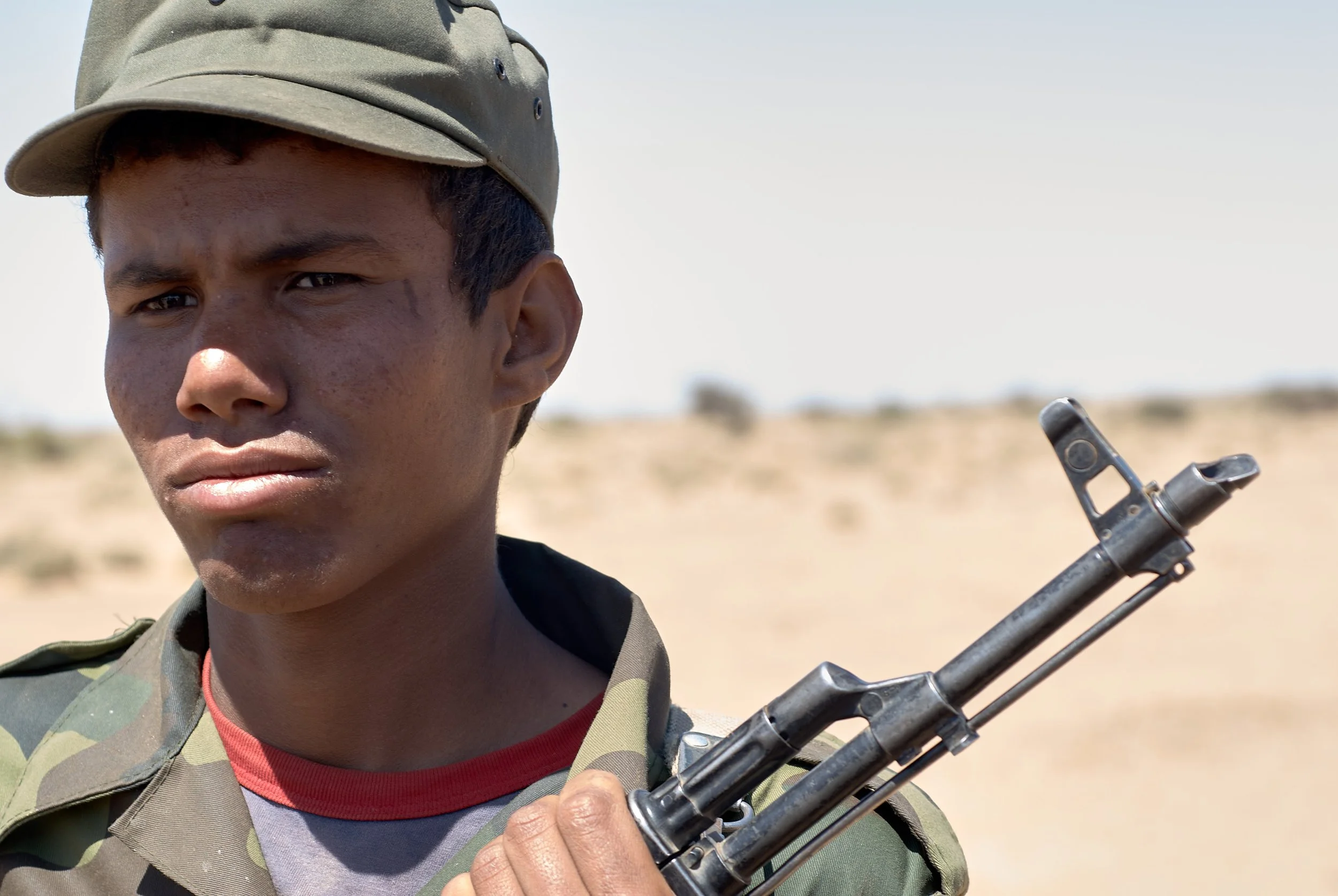
When I first started out as a freelance photographer I was keen to return to an area I had been to previously during a trip through Africa I made when I was in my twenties. At the time I knew nothing of Western Sahara or the Polisario Front, but as I started to develop an interest in documentary photography and visual storytelling I wanted to explore the issue in more detail, so in 2007 I returned to the area in South West Algeria where Saharaoui refugees have made their home since their Moroccan enforced exile.
Since 1976 the Polisario Front, the government-in-exile of the Saharaoui fighting for self-determination of the Western Sahara, has been at war with Morocco. The former Spanish colony was annexed by Morocco after the former colonial power left in 1975. It was later sealed off by a heavily guarded wall built by the Moroccans known as the Berm, stretching the length of the border between Occupied Western Sahara and the Polisario controlled liberated territories.
Since a UN-brokered ceasefire in 1991, Polisario soldiers, young and old, perform field exercises and scout Moroccan positions in the mine-ridden no man's land. There are an estimated three million landmines and unexploded ordnance littering the former frontline resulting in many casualties and deaths every year among nomadic Berber livestock herders and Saharaoui.
Meanwhile, refugees from the Western Sahara who fled the conflict have been subsisting in dusty camps in neighbouring Algeria, Polisario's main ally, who have closed their border with Morocco.
Polisario estimates there are 170,000 refugees in the camps in South Western Algeria who rely on international aid, distributed by the United Nations. Despite daily hardships the refugee camps are well-organised: women's rights are widely respected, literacy is above 90%, and many children go on to study at universities abroad. A fragile ceasefire exists but tensions are high. Saharaoui who remain in the occupied territories are subject to police discrimination, detention and regularly report incidents of human rights abuses.
I lived with Polisario soldiers in the desert and was able to travel with them to locations where they carried out military training and operations. I also met some incredible people working with Landmine Action who were training local Saharaoui to clear mines from what is still one of the world's heaviest land-mined areas.
To see the picture gallery I shot for the BBC, click here
For more information on Western Sahara check out the amazing work being carried out by Sandblast
Cuban Rap
Towards the end of 2014 United States President Obama announced that America would restore full diplomatic relations with Cuba, more than 50 years after President Eisenhower imposed a trade embargo on Cuban exports during the cold war. What this means for the future of Cuba is uncertain, but it will no doubt mean that a big change is on its way.
Cuba and the US have had a long-standing love/hate relationship but in it's cultural heritage, especially through music, Cuba has managed to bridge any divisions and reach a truly international, even global audience.
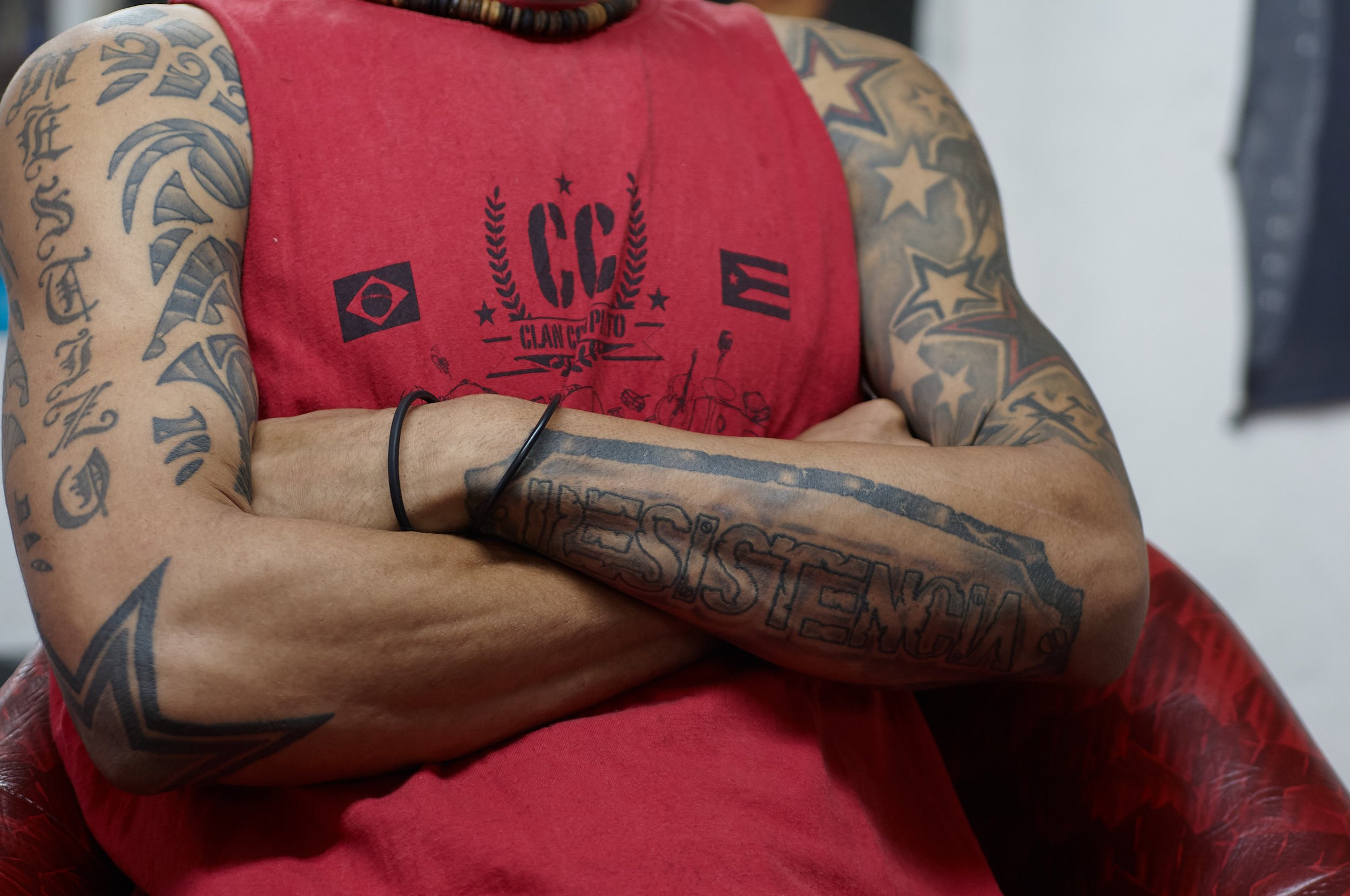
When you think of Cuban music, you think of the wealth of fantastic talent that has come out of Cuba over the years - artists like Willie Colon, Celia Cruz, Irakere and Buena Vista Social Club. Nowadays, there is a big Reggaeton scene in Cuba (as there is elsewhere in Latin America) but what many people don't associate with the island is a flourishing Rap and Hip Hop scene. Perhaps typical of Cuba, this American import has been enthusiastically adopted by Cubans and is steadily increasing in popularity. In 2002 the Cuban government recognised the significance of the Rap music scene and even provided a degree of endorsement through a Ministry of Culture sponsored record label to promote local artists.
However, not all Cuban Rap artists are so enthusiastic about what they see as the State sponsored, somewhat sanitised version of their art form. Alongside the officially recognised Rap scene there exists a slightly more subversive, slightly more critical scene. Ironically, a lot of the artists aren't anti Castro or anti communist, but simply critical of the state and its methods of control.
Some years ago I travelled to Cuba with Zoë Murphy and we produced a picture slideshow for the BBC about the underground Rap Music scene.
Appleby Horse Fair
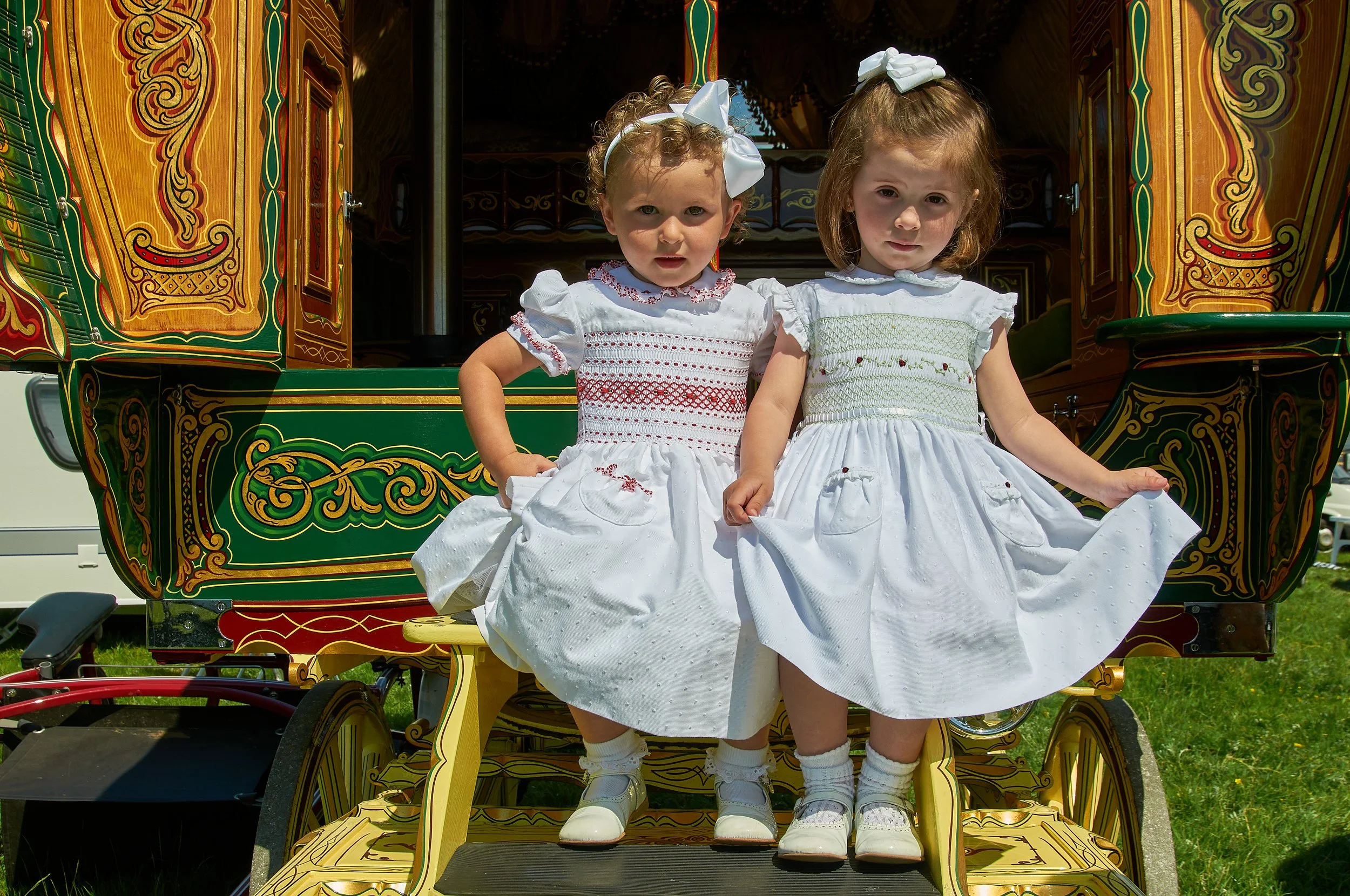
Appleby Horse Fair in Cumbria is the largest annual gathering of Gypsies and Travellers in Europe. In 2010 I shot a series of images for an audio slideshow for the BBC with the help of Zoë Murphy who recorded the audio and carried out the interviews.
Audio slideshow of Apple Horse Fair